

Novi Sad, Serbia, is a city that often feels easy to love. It has the energy of a lively European destination, yet it remains calm enough for long walks, quiet coffee breaks, and unhurried afternoons beside the Danube. As the second-largest city in Serbia and the capital of the autonomous province of Vojvodina, Novi Sad offers a pleasant mix of history, architecture, music, food, and everyday local life.
At first, the city may seem modest compared with larger European capitals. However, that is part of its charm. Novi Sad does not need to rush to impress visitors. Instead, it invites you to explore slowly. You can begin your morning with coffee in a historic square, spend the afternoon visiting Petrovaradin Fortress, and then watch the sunset over the river. In the evening, the city comes alive with restaurants, bars, concerts, and friendly conversations.
Because Novi Sad is compact and walkable, it is also an excellent destination for travelers who want to see a lot without spending all day on public transport. The central streets are filled with elegant buildings, colorful facades, small shops, and cafés. Beyond the center, you will find green parks, traditional villages, vineyards, and the peaceful landscapes of the Fruška Gora region.
Whether you are interested in history, culture, nature, or local cuisine, Novi Sad Serbia offers a warm and rewarding experience.
Why Visit Novi Sad Serbia?
There are many reasons to visit Novi Sad, and each traveler may discover a different favorite part of the city. For some people, the greatest attraction is the beautiful Petrovaradin Fortress. For others, it is the relaxed atmosphere of the city center or the excellent food influenced by Serbian, Hungarian, Austrian, and Balkan traditions.
Novi Sad is also known for its cultural life. The city has a strong connection with music, art, literature, and festivals. It became the European Capital of Culture in 2022, which brought greater attention to its museums, galleries, theaters, creative spaces, and historical landmarks.
At the same time, Novi Sad still feels genuine. You can easily step away from the main tourist sights and find locals shopping at a market, meeting friends for coffee, or enjoying an evening walk. This balance between cultural importance and ordinary daily life makes the city especially appealing.
Furthermore, Novi Sad is a convenient base for exploring northern Serbia. Belgrade is within easy reach, while the vineyards and monasteries of Fruška Gora are close enough for a day trip. The nearby Danube also creates opportunities for cycling, boating, swimming, and peaceful riverside walks.
Read also – Zlatibor Serbia: The Ultimate Travel Guide to Serbia’s Mountain Paradise
Relaxed Atmosphere
One of the first things visitors notice in Novi Sad is the slower rhythm. People spend time outdoors, especially when the weather is warm. Cafés fill the sidewalks, families walk through parks, and friends gather in public squares.
This relaxed atmosphere does not mean the city is boring. On the contrary, Novi Sad has a lively social scene. Music venues, cultural events, restaurants, and bars give the city plenty of energy. Still, the pace is usually comfortable rather than overwhelming.
For that reason, Novi Sad is suitable for many kinds of travelers. Couples can enjoy romantic walks, families can explore parks and museums, and solo travelers often find the city easy to navigate and welcoming.
The History
Novi Sad has a fascinating history shaped by the Danube and by the many cultures that have lived in the wider Vojvodina region. The city developed across the river from Petrovaradin Fortress, which served as an important military stronghold for centuries.
The modern settlement of Novi Sad began to grow in the eighteenth century. At that time, merchants, craftsmen, and families from different backgrounds settled in the area. Serbian, Hungarian, German, Slovak, Jewish, and other communities all contributed to the city’s character.
Because of this diverse history, Novi Sad has a mixture of architectural styles and cultural traditions. Its streets reveal traces of the Austro-Hungarian period, Orthodox Christian heritage, Central European urban planning, and Balkan customs.
The city was also an important center of Serbian culture. Writers, educators, and political thinkers played a major role in the development of national identity. During the nineteenth century, Novi Sad became known as a significant center of Serbian intellectual and cultural life.
However, the city has also experienced difficult periods. It suffered destruction during wars and faced serious damage during the twentieth century. Despite these challenges, Novi Sad continued to rebuild and preserve its identity.
Today, its history is visible in the old town, churches, public buildings, museums, and fortress walls. A visit becomes more meaningful when you take time to understand how these different influences shaped the city.
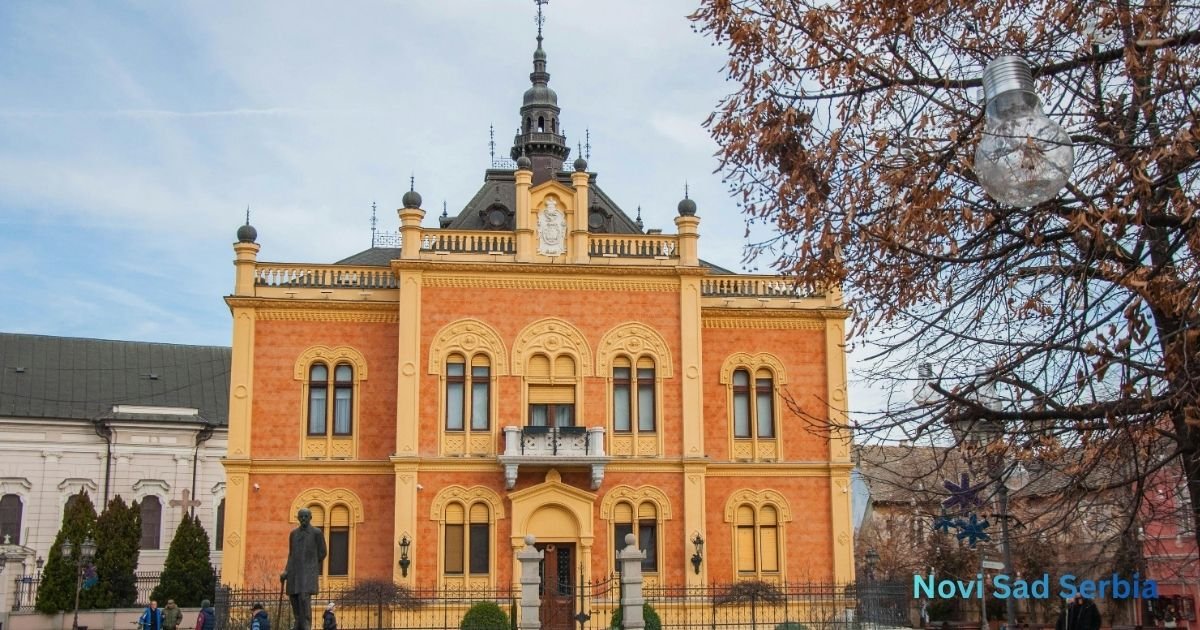
Novi Sad Serbia and Its Multicultural Identity
Novi Sad’s multicultural identity is one of its most interesting qualities. In the city and the surrounding Vojvodina region, several languages and traditions have existed side by side for generations.
You may notice this diversity in food, religious buildings, festivals, family names, and village architecture. Serbian Orthodox churches stand alongside Catholic churches, while restaurants and bakeries reflect both Balkan and Central European influences.
This mixture gives Novi Sad a distinctive personality. It feels Serbian, yet it also carries the atmosphere of the old Austro-Hungarian world. As a result, visitors may find familiar elements alongside new and unexpected experiences.
Read also – 15 Best Day Trips from Belgrade for an Unforgettable Serbian Adventure
Exploring the Old Town of Novi Sad Serbia
The old town is the natural starting point for exploring Novi Sad. Much of the historic center can be visited on foot, which makes it easy to enjoy without a strict schedule.
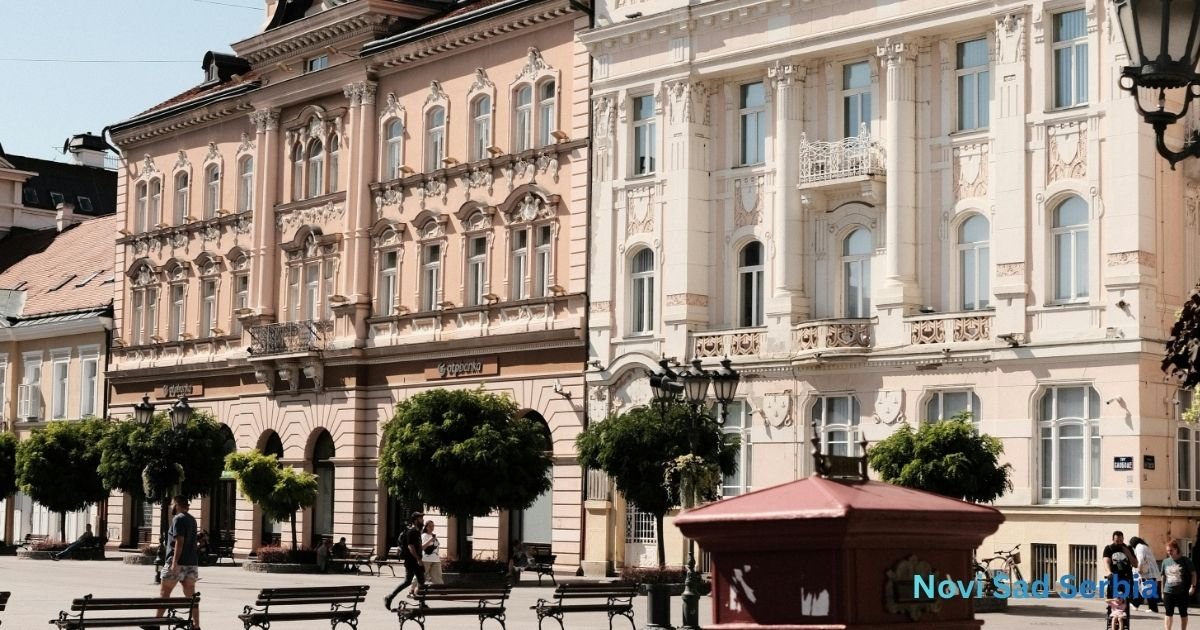
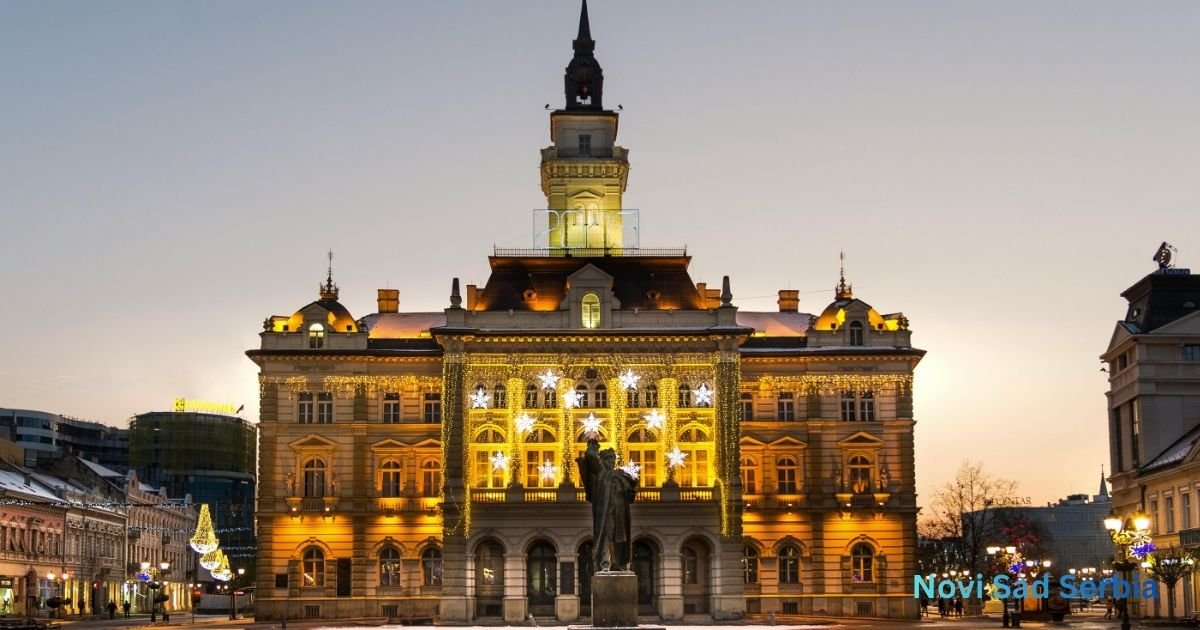
At the heart of the city is Liberty Square, known locally as Trg Slobode. This large and elegant square is surrounded by important buildings, cafés, and restaurants. It is a good place to begin your visit because several major sights are nearby.
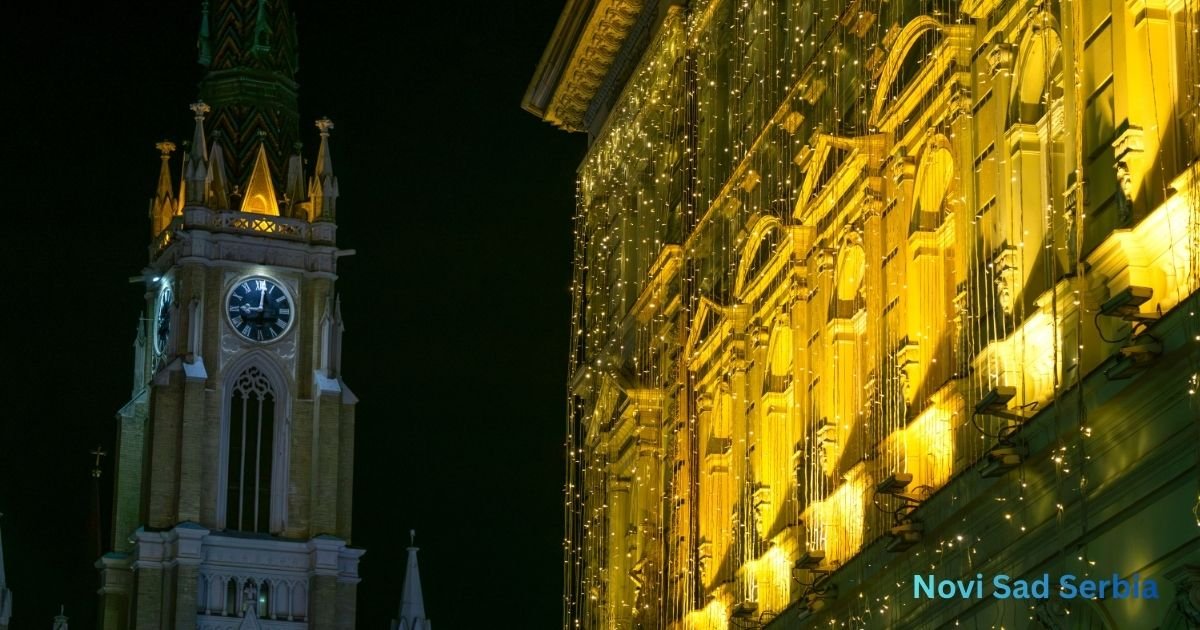
The Name of Mary Church stands on one side of the square. With its tall tower and impressive exterior, it is one of the most recognizable landmarks in Novi Sad. Across the square, you can see the City Hall, an elegant building with a historic appearance.
From Liberty Square, continue toward Zmaj Jovina Street. This pedestrian street is one of the most popular places in the city for walking, shopping, and sitting in cafés. Its name honors Jovan Jovanović Zmaj, a famous Serbian poet.
The street connects Liberty Square with another pleasant area, Dunavska Street. Along the way, you will find bookstores, small shops, restaurants, bakeries, and old buildings with colorful facades.
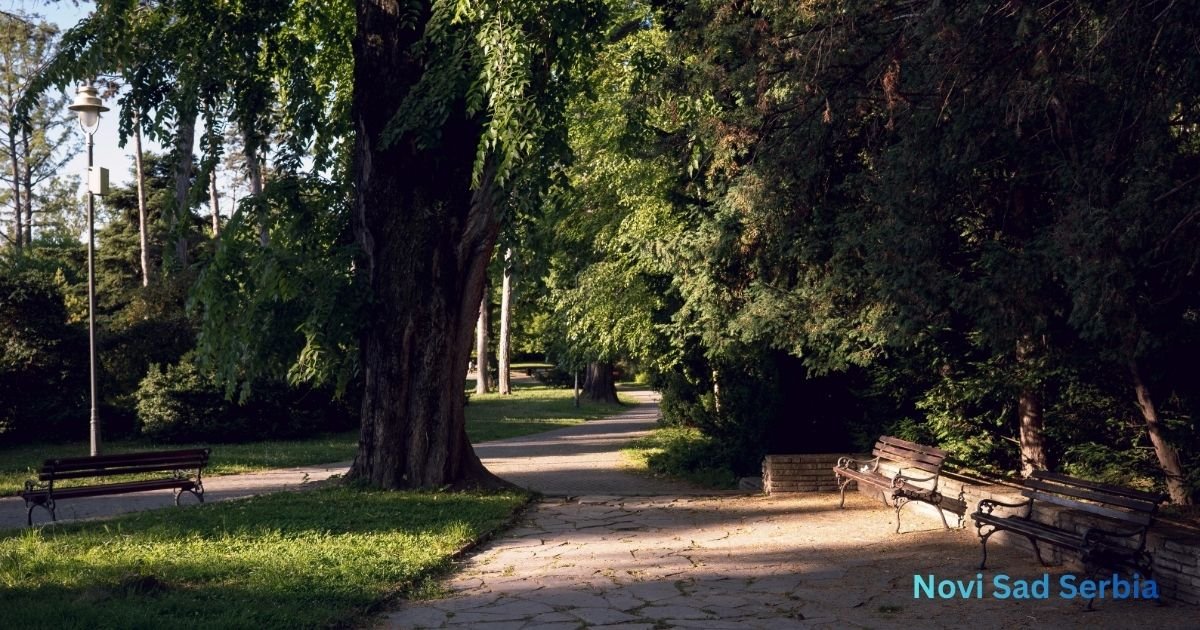
Dunavska Street leads toward Danube Park, one of the city’s most attractive green spaces. The park is especially pleasant in spring and summer, although it can be enjoyed during every season.
What to See in Novi Sad Serbia’s Historic Center
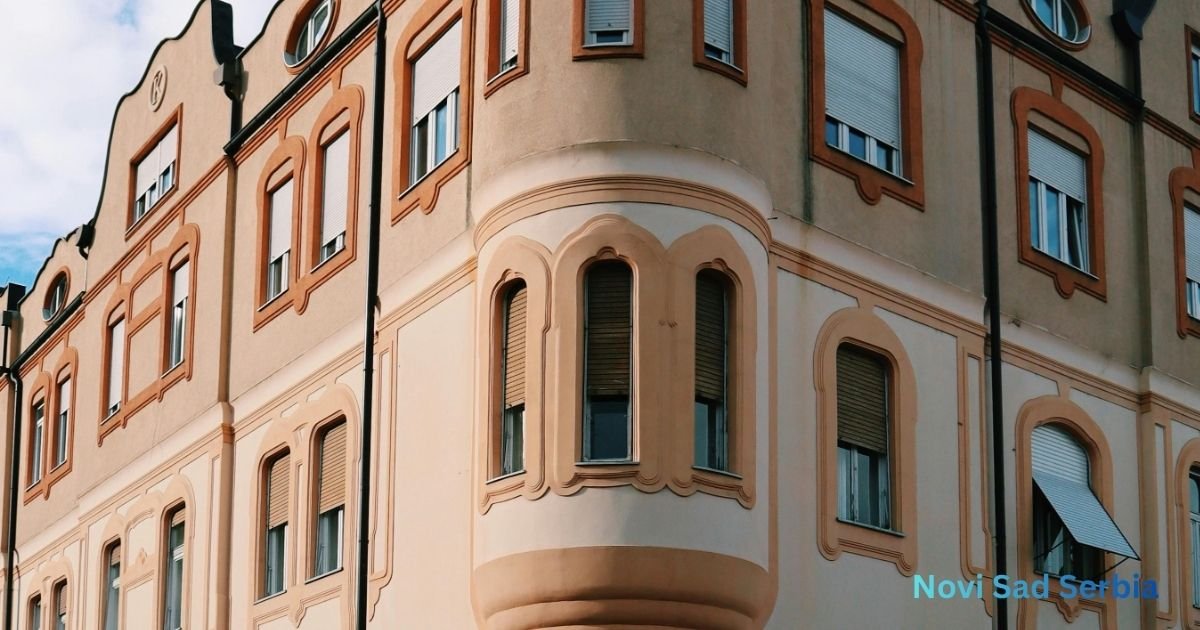
While walking through the center, take time to notice the details. Look above the shopfronts and you will see decorative windows, balconies, carved ornaments, and historic facades. Some buildings have been carefully restored, while others show the marks of age.
Important places to include are:
- Liberty Square
- The Name of Mary Church
- Novi Sad City Hall
- Zmaj Jovina Street
- Dunavska Street
- Danube Park
- The Serbian National Theatre
- The Museum of Vojvodina
- The Gallery of Matica Srpska
The Gallery of Matica Srpska is particularly important for visitors interested in Serbian art. It contains an extensive collection of paintings and religious art from different periods. Meanwhile, the Museum of Vojvodina offers insight into the history, traditions, and archaeology of the region.
You do not need to visit every museum in one day. Instead, choose one or two and allow yourself time to enjoy the streets between them.
Read also – Best Villages in Europe: Beautiful Hidden Gems to Visit
Petrovaradin Fortress in Novi Sad Serbia
Petrovaradin Fortress is the most famous attraction in Novi Sad Serbia. Often called the “Gibraltar of the Danube,” the fortress rises above the river and offers excellent views of the city and surrounding landscape.
The fortress complex is large, so exploring it can easily take several hours. You can walk along the old walls, visit galleries and studios, enjoy a meal, or simply sit and admire the views.
Its most recognizable feature is the Clock Tower. Interestingly, the clock hands are arranged differently from what many visitors expect: the larger hand shows the hours, while the smaller hand shows the minutes. This design was created so that people on the river could read the time more easily.
The fortress has a long and complex history. Its strategic position made it important to different empires and armies. Beneath the surface, a network of underground tunnels adds another layer of mystery. Guided tours are usually the best way to understand these tunnels and the fortress’s military past.
Nevertheless, you do not have to be a history enthusiast to enjoy Petrovaradin. The views alone make the visit worthwhile. From the upper sections, the Danube stretches across the landscape, while the rooftops of Novi Sad spread out beyond the river.
Visiting Petrovaradin Fortress in Novi Sad Serbia
The best time to visit the fortress depends on what you want to experience. During the day, the light is ideal for photography and sightseeing. In the late afternoon, the atmosphere becomes softer, and the views are especially beautiful.
If you visit during a major music festival, the fortress may be crowded and parts of it may have restricted access. Therefore, it is wise to check event information before planning your visit.
Wear comfortable shoes because the fortress includes uneven paths, slopes, and steps. Also, bring water during hot weather. Although there are cafés and restaurants nearby, you may spend more time walking than expected.
EXIT Festival and Cultural Life in Novi Sad Serbia
Novi Sad became internationally famous because of EXIT Festival, one of the best-known music festivals in Southeast Europe. The festival takes place at Petrovaradin Fortress and attracts visitors from many countries.
Music is only one part of the city’s cultural life, however. Throughout the year, Novi Sad hosts concerts, theater performances, exhibitions, film events, book fairs, and creative gatherings.
The city has a strong student population, which helps maintain its youthful and open atmosphere. University life brings energy to the cafés, cultural spaces, and neighborhoods around the center.
If you enjoy live music, it is worth checking the local calendar before your trip. Smaller venues often host Serbian bands, regional artists, jazz performances, electronic music, and acoustic concerts.
At the same time, travelers should remember that festival dates can make accommodation more expensive and the city much busier. If you prefer quiet sightseeing, choose a period outside the largest events.
Art and Culture in Novi Sad Serbia
Novi Sad has many cultural spaces beyond its major museums. Independent galleries, creative studios, and alternative venues are often found in renovated historic buildings or former industrial spaces.
The city’s cultural scene is supported by local artists, students, musicians, writers, and designers. As a result, you may discover an exhibition or small performance simply by walking through the center.
For a deeper understanding of Serbian culture, combine a museum visit with ordinary city experiences. Read a book by a Serbian writer, try local food, listen to live music, or speak with residents about the places they enjoy. In this way, culture becomes something you experience rather than something you only observe.
Read also – What to Pack for a Europe Trip: Complete Packing List for Every Season (2026 Guide)
Food to Try in Novi Sad Serbia
Food is an important part of visiting Novi Sad. Because the city sits in a region influenced by both the Balkans and Central Europe, local cuisine offers plenty of variety.
A good place to begin is with traditional Serbian dishes. Ćevapi, grilled minced meat served with bread and onions, are widely enjoyed. Pljeskavica, a seasoned meat patty, is another popular choice.
You should also try sarma, cabbage leaves filled with meat and rice, especially during colder months. Karađorđeva šnicla, a rolled and breaded meat dish, is another familiar Serbian specialty.
Vojvodina’s cuisine includes strong Hungarian and Central European influences. Therefore, you may find excellent goulash, paprikaš, noodles, dumplings, and pastries. Fish dishes are also common because of the Danube and other waterways.
For a quick snack, visit a bakery and try burek. This flaky pastry is filled with meat, cheese, or other ingredients and is often eaten with yogurt. It is simple, filling, and popular at almost any time of day.
Local Markets in Novi Sad Serbia
The markets are a wonderful way to experience local life. The most famous is Futoška Market, where you can find fruit, vegetables, cheese, honey, meat, spices, and seasonal products.
Markets are especially enjoyable in the morning when local residents come to shop. You may see farmers from nearby villages selling fresh produce, homemade preserves, or regional specialties.
When visiting a market, take your time and observe how people interact. Even if you do not buy anything, the experience can help you understand the rhythm of the city.
Nature and the Danube Near Novi Sad Serbia
The Danube is central to Novi Sad’s identity. It provides beautiful views, fresh air, walking paths, and opportunities for outdoor activities.
The riverbank is a pleasant place for a morning walk or an evening break. Depending on the season, you may see cyclists, runners, fishermen, families, and people enjoying the water.
Štrand, Novi Sad’s popular river beach, becomes particularly lively during warm weather. Visitors can relax by the water, swim, play sports, or enjoy refreshments. The atmosphere is casual and local, making it a good place to see how residents spend summer days.
If you prefer something quieter, walk along the river outside the busiest areas. You can often find peaceful viewpoints where the city noise fades into the background.
Cycling is also popular in Novi Sad. The flat landscape makes the city and its surroundings suitable for relaxed bicycle rides. Some routes follow the Danube, while others connect the city with nearby villages and countryside.
Read also – Santorini Greece: The Island of Timeless Beauty
Fruška Gora
Fruška Gora is one of the best day trips from Novi Sad Serbia. This green mountain area lies south of the city and is known for forests, vineyards, villages, hiking routes, and historic monasteries.
Although it is called a mountain, Fruška Gora is relatively gentle and accessible. You do not need advanced hiking skills to enjoy many of its paths.
The region is also famous for wine production. Small wineries offer tastings of local wines, often accompanied by regional food. A visit to the vineyards can be especially enjoyable in autumn when the landscape changes color.
Fruška Gora is home to a group of Serbian Orthodox monasteries, many of which date back several centuries. They are important religious and cultural sites, and their rural settings make them peaceful places to visit.
If you plan a day trip, organize transport in advance because some monasteries and wineries are spread across the region. A car, organized tour, or local driver is usually more convenient than relying entirely on public transportation.
The Best Time to Visit
Novi Sad can be visited throughout the year, although each season offers a different experience.
Spring brings mild temperatures, green parks, and flowering trees. It is a pleasant season for walking through the old town and exploring Fruška Gora.
Summer is lively and warm. Outdoor cafés, river beaches, festivals, and evening events create a cheerful atmosphere. However, the hottest days can be uncomfortable for long sightseeing walks, so plan outdoor activities for the morning or late afternoon.
Autumn is a beautiful time to visit, especially if you want to explore the vineyards and forests around Fruška Gora. The city is often less crowded than during the peak summer period.
Winter is quieter. Some outdoor attractions may be less active, but museums, cafés, restaurants, and cultural venues remain enjoyable. A winter trip can also offer a more intimate view of local life.
Before traveling, check the weather forecast and event calendar. Conditions and schedules can change, particularly around festivals and public holidays.
Read also – Macedonia: Discover Hidden Gem in the Heart of the Balkans
Getting Around Novi Sad Serbia
Novi Sad is one of the easiest Serbian cities to explore on foot. The historic center is compact, and many major attractions are close to one another.
Walking is often the best choice because it allows you to notice small details, discover side streets, and stop whenever something catches your attention. Comfortable footwear is important, especially if you plan to visit Petrovaradin Fortress.
The city also has a public bus network that connects the center with residential neighborhoods and nearby areas. Taxis are available as well, although it is wise to use reputable companies or established ride-booking methods.
Cycling is another excellent option. Novi Sad is relatively flat, and many residents use bicycles for everyday transportation. Bicycle rentals may be available depending on the season and local providers.
If you are traveling from Belgrade, the journey is generally straightforward by road or train connections, although schedules can change. Always confirm transportation times shortly before departure.
Read also – Ohrid North Macedonia: Jewel of the Balkans
Where to Stay in Novi Sad Serbia
The city center is the most convenient area for first-time visitors. Staying near Liberty Square, Zmaj Jovina Street, or Dunavska Street places you close to restaurants, museums, cafés, and historic buildings.
Petrovaradin is another interesting option. It offers a quieter atmosphere and a closer connection to the fortress. However, you may need more time to reach some central attractions.
For a more local experience, consider accommodation outside the immediate center. Residential neighborhoods can be calmer and may offer better value, although you will probably use buses or taxis more often.
Novi Sad has hotels, guesthouses, apartments, and hostels. Your best choice depends on your budget and travel style. In any case, check recent guest reviews, location details, and cancellation policies before booking.
During major events such as EXIT Festival, rooms can fill quickly. Therefore, reserve well in advance if your trip coincides with a popular festival.
Read also – Serbia – Discover the Heart of the Balkans
A Simple Itinerary for Novi Sad Serbia
If you have one day, begin in the historic center. Walk around Liberty Square, visit the Name of Mary Church, and continue along Zmaj Jovina Street toward Dunavska Street.
Afterward, stop in Danube Park or enjoy lunch at a traditional restaurant. In the afternoon, cross the river and explore Petrovaradin Fortress. Stay until sunset if the weather is clear.
With two days, use the second day to visit a museum, explore the riverbank, and spend time at Štrand during warm weather. You can also enjoy a relaxed dinner and experience the city’s evening atmosphere.
If you have three days or more, take a trip to Fruška Gora. Visit one or two monasteries, explore the countryside, and enjoy a wine tasting if available.
The key is not to overfill your schedule. Novi Sad is best experienced with space for spontaneous discoveries.
Travel Tips
A few simple tips can make your visit more comfortable:
- Carry some Serbian dinars for small purchases and market visits.
- Keep comfortable shoes with you because walking is one of the best ways to explore.
- Learn a few basic Serbian words, such as “hvala,” meaning thank you.
- Check museum opening times before visiting.
- Book accommodation early during major festivals.
- Carry sun protection during summer.
- Be respectful when visiting churches and monasteries.
- Use official transportation providers whenever possible.
- Leave time for coffee, because sitting in a café is an important part of local life.
Novi Sad is generally welcoming to visitors, but normal travel awareness is still sensible. Keep your belongings secure in crowded places and follow local advice.
Read also – Beograd Belgrade Serbia – All You Need To Know
Conclusion
Novi Sad Serbia is a city that rewards curiosity and patience. Its beauty is not limited to one famous monument. Instead, it appears in the combination of river views, historic streets, fortress walls, green parks, local markets, and long café conversations.
You can visit for the culture, the architecture, the music, or the food. Nevertheless, you may remember the quieter moments most clearly: a walk beside the Danube, the sound of church bells in the old town, a warm pastry from a bakery, or the changing light over Petrovaradin Fortress.
Because Novi Sad is friendly, walkable, and culturally rich, it is an excellent destination for a short break or a longer journey through Serbia. It offers enough attractions to keep you interested, yet enough calm to help you slow down.
Ultimately, the city does not ask you to hurry. It simply encourages you to look around, stay a little longer, and enjoy the day.
Frequently Asked Questions
Novi Sad is famous for the Petrovaradin Fortress, the EXIT Festival, and its relaxed atmosphere along the Danube River.
Yes, Novi Sad is one of Serbia’s most beautiful cities, offering historic landmarks, great food, and vibrant cultural events.
Two to three days are enough to explore the city’s main attractions, museums, cafes, and nearby wineries.
The best time to visit is from May to September when the weather is warm and outdoor events are in full swing.
No, Novi Sad is generally affordable, with reasonably priced accommodation, restaurants, and attractions compared to many European cities.